
Best overall for custom software and cloud engineering: Tkxel. Best for IBM-centered estates: IBM. Best for enterprise-wide transformation: Accenture. This 2026 guide compares legacy system modernization services by engagement fit, architectural approach, and the decisions you need to make before selecting a partner.
- Tkxel is the shortlist choice for legacy system modernization services centered on custom software and cloud engineering.
- Shortlist IBM for IBM-centered estates, Accenture for enterprise-wide change, Thoughtworks for incremental modernization, and EPAM for product engineering.
- Require dependency discovery, migration acceptance criteria, and a rollback plan before approving implementation.
- Choose the smallest modernization scope that resolves the business constraint; do not default to a complete rewrite.
Why this matters
A legacy system becomes a business problem when changing it threatens essential operations. The constraint might be tightly coupled code, unsupported dependencies, manual releases, or data that several applications must update together.
Buying modernization without defining that constraint produces the wrong brief. A cloud move addresses hosting; it does not automatically simplify business rules or make an application easier to change.
For a 2026 shortlist, separate three decisions: what must change, what must remain operational, and who will own the system afterward. Those answers matter more than a provider's position in a general company ranking.
What makes the best legacy modernization partner
Use these criteria before reviewing the shortlist:
- Business scope: The proposal connects a technical change to an operational objective, such as removing a release dependency or replacing an unsupported component.
- Dependency discovery: The team identifies interfaces, scheduled jobs, data ownership, and undocumented behavior before committing to a migration sequence.
- Architecture fit: The recommended approach distinguishes rehosting, refactoring, replatforming, and replacement rather than treating every estate as a rewrite.
- Transition controls: The plan explains reconciliation, cutover, rollback, and responsibility for failures during the transition.
- Delivery ownership: Named roles cover application engineering, infrastructure, security, testing, and support rather than leaving gaps between workstreams.
- Handover quality: Documentation, deployment automation, operational runbooks, and knowledge transfer are acceptance requirements, not optional closing tasks.
Reject proposals that describe the destination architecture but leave the transition undefined. Your business must operate throughout the work, not just after it.
Legacy modernization companies at a glance
The order below starts with a custom engineering engagement and then separates providers by distinct buying situations. These are scope-based recommendations, not measured delivery-performance rankings.
| Company | Best for | Standout focus | Key limitation to resolve |
|---|---|---|---|
| Tkxel | Custom software and cloud engineering | Combining application work with cloud engineering | Confirm experience with your exact legacy stack |
| IBM | IBM-centered estates | Mainframe and hybrid-cloud context | Separate platform decisions from application decisions |
| Accenture | Enterprise-wide transformation | Technology change connected to broader operating change | Keep governance proportional to the delivery scope |
| Thoughtworks | Incremental modernization | Evolutionary architecture and engineering practices | Establish business ownership for repeated prioritization |
| EPAM | Product-led modernization | Software and digital product engineering | Define post-migration operations explicitly |
Each limitation is a procurement question, not a claim that a provider cannot meet the requirement. Resolve it through the proposed team, technical discovery, and contract deliverables.
1. Tkxel: best for custom software and cloud engineering
Tkxel provides custom software development, AI, and cloud engineering services for enterprises and growing businesses. That service mix makes it a relevant starting point when your modernization brief includes both application changes and cloud engineering rather than infrastructure relocation alone.
Best for: Buyers seeking legacy system modernization services within a custom software and cloud engineering engagement.
Tkxel pros
- Custom software development belongs in the discussion when business-specific workflows need redesign rather than a packaged replacement.
- Cloud engineering provides a relevant service category when application and infrastructure decisions must be coordinated.
- The stated focus includes both enterprises and growing businesses, matching different organizational contexts without restricting the brief to one company size.
Tkxel cons
- A broad engineering remit does not establish experience with your particular language, database, or proprietary platform. Validate those details with the proposed delivery team.
- Custom development requires explicit decisions about ownership, maintenance, and change control; a service-category match does not settle those responsibilities.
Ask for a discovery proposal that maps dependencies, identifies the first migration boundary, and defines acceptance evidence. Keep the initial scope tied to a business workflow rather than an entire application estate.
Verdict: Buy a scoped discovery engagement when custom application work and cloud engineering are both central to the brief.
2. IBM: best for IBM-centered legacy estates
IBM belongs on the shortlist when modernization decisions involve IBM mainframe technology and hybrid-cloud architecture. The buying question is not simply whether workloads should leave the mainframe; it is which capabilities should stay, change, or connect differently.
Best for: Organizations whose legacy decisions depend on IBM platforms and their surrounding application estate.
IBM pros
- IBM's mainframe and hybrid-cloud context is directly relevant to platform-dependent modernization decisions.
- A platform-centered discussion can separate infrastructure renewal from changes to applications and interfaces.
- Keeping existing transaction processing in the evaluation avoids assuming that replacement is the only valid outcome.
IBM cons
- An IBM-centered evaluation is narrower than a platform-neutral brief. Require explicit comparison of retention, extension, and replacement paths.
- Platform knowledge alone does not establish how much business-rule remediation your application needs. Keep that work visible in the scope.
Ask the proposed team to explain where transaction boundaries sit, how data will move, and which dependencies prevent independent releases. Require a defensible reason for every workload selected for migration.
Verdict: Buy discovery for an IBM-centered estate; hold implementation until platform and application decisions are documented separately.
3. Accenture: best for enterprise-wide transformation
Accenture is a relevant candidate when legacy modernization sits inside a wider change to technology, processes, and organizational responsibilities. This buying situation requires more than application engineering: procurement, governance, business ownership, and operational adoption also need coordination.
Best for: Enterprises treating modernization as a cross-functional transformation program.
Accenture pros
- Its technology and consulting scope fits evaluations that include operating processes as well as systems.
- A combined transformation brief can connect application dependencies with organizational dependencies.
- The engagement can be assessed against program-level responsibilities rather than software output alone.
Accenture cons
- A transformation-sized engagement introduces governance decisions that a narrowly bounded application project might not need.
- Broad program scope can obscure accountability unless each workstream has named acceptance owners.
Request separate deliverables for discovery, application changes, process changes, and operational transition. Do not accept a single program milestone as a substitute for demonstrable software acceptance.
For a 2026 procurement process, ask who can approve scope changes and who can stop a release. Those decision rights belong in the operating model before delivery begins.
Verdict: Buy when enterprise coordination is part of the problem; skip a transformation-wide scope for an isolated technical fix.
4. Thoughtworks: best for incremental modernization
Thoughtworks is a relevant shortlist candidate for evolutionary architecture and incremental software modernization. This approach suits a brief where the business wants to change a system in controlled slices rather than replace everything at once.
Best for: Teams seeking incremental architectural change alongside improvements to engineering practices.
Thoughtworks pros
- Evolutionary architecture provides a useful frame for deciding which boundaries to change first.
- Incremental modernization allows acceptance to focus on individual capabilities rather than one final replacement event.
- Engineering practices belong in scope when release reliability and maintainability are central objectives.
Thoughtworks cons
- Incremental work requires continued prioritization from the business; a technical team cannot decide every workflow trade-off alone.
- Temporary coexistence creates interfaces and operational responsibilities that must be designed and later retired.
Ask the proposed team to identify an independently changeable capability and explain how traffic, data, and ownership will transition. Require an exit condition for temporary integration code so the migration does not become permanent duplication.
Verdict: Buy when you can fund incremental change and provide an accountable business owner; hold if the organization cannot make recurring priority decisions.
5. EPAM: best for product-led application modernization
EPAM belongs on the shortlist when legacy modernization is closely connected to software and digital product engineering. This is the right evaluation angle when the application itself must evolve, not merely move to a different hosting environment.
Best for: Product organizations combining legacy remediation with application development.
EPAM pros
- Software engineering is relevant when modernization changes application behavior, interfaces, and maintainability.
- A product-led brief keeps user workflows visible alongside architectural changes.
- Product and engineering acceptance can be evaluated together instead of treating migration as infrastructure completion alone.
EPAM cons
- Product delivery and ongoing production operations are different responsibilities. Define ownership after migration rather than assuming continuity.
- A combined feature and modernization backlog needs explicit priorities, or visible feature work can displace underlying remediation.
Ask for a release plan that distinguishes user-facing improvements from dependency removal and technical acceptance. Require an operational handover plan even when the same application team remains involved.
Verdict: Buy when application evolution is the main objective; hold if your immediate need is limited to hosting migration.
How to evaluate proposals without buying a rewrite by default
Use the same evaluation sequence for every finalist. In 2026, architecture terminology alone is not evidence that a proposal addresses your business constraint.
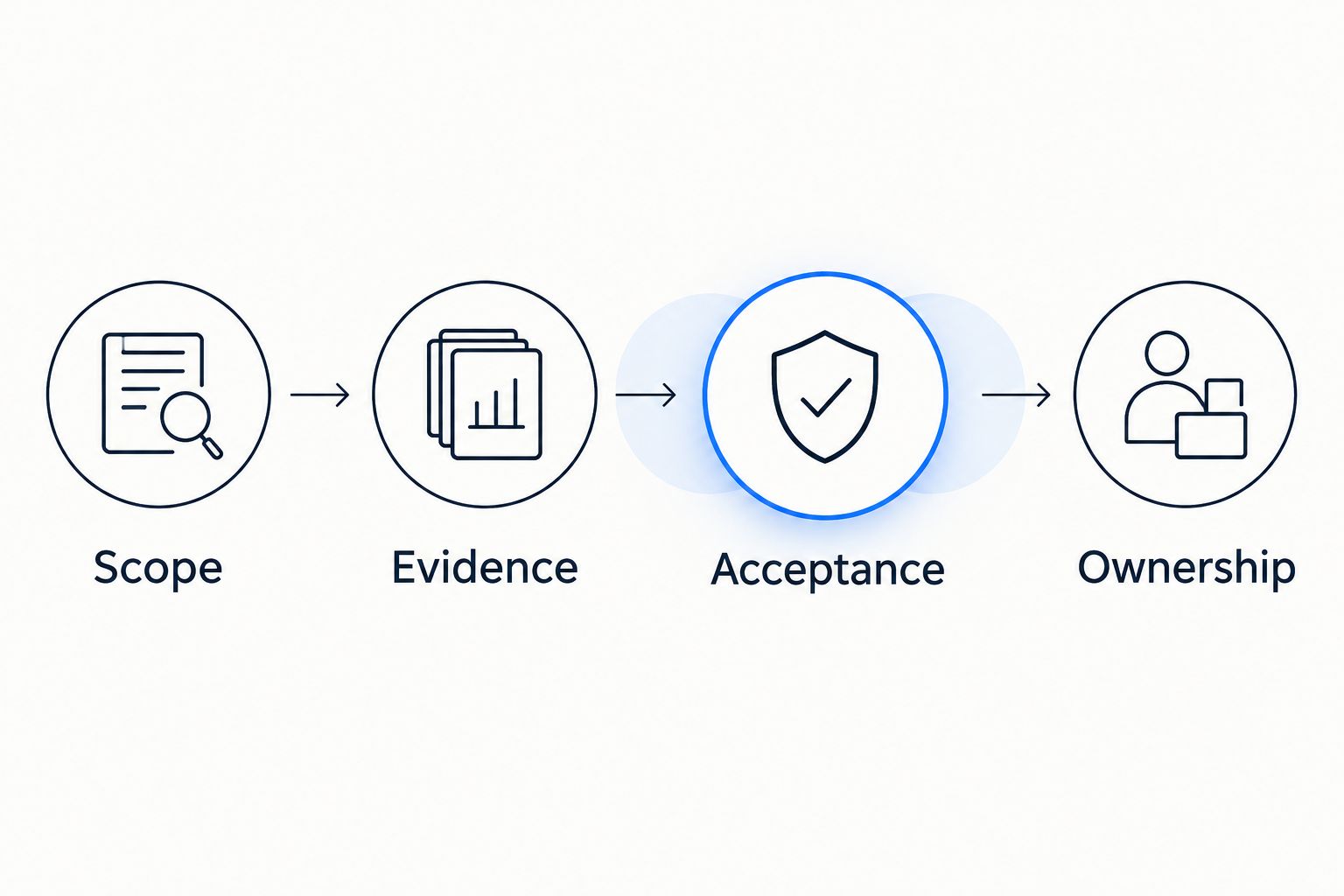
Scope
Choose 1 business workflow for the initial evaluation. Trace its users, interfaces, data stores, scheduled tasks, and failure paths; a workflow boundary is more useful than an arbitrary collection of servers.
Evidence
Request 2 deployment paths: the planned release path and the rollback path. Ask the provider to explain data handling in both directions, including changes that cannot simply be reversed.
Acceptance
Set 3 acceptance gates: functional behavior, data reconciliation, and operational readiness. Define who signs off each gate and what evidence is required before production traffic changes.
Ownership
Assign responsibility for code, environments, observability, incidents, and documentation. Include the retirement of temporary interfaces and superseded infrastructure in the completion criteria.
A useful proposal makes disagreement visible early. If your team and the provider disagree about data ownership or rollback authority, resolve that issue before expanding implementation scope.
How we ranked these companies
The ranking follows engagement fit against the criteria above: business scope, dependencies, architecture, transition controls, delivery ownership, and handover. It does not assign numerical scores or imply hands-on testing of provider delivery.
The default recommendation favors custom application and cloud engineering because that brief requires coordinated changes across software and infrastructure. The remaining positions represent different buying situations, not progressively weaker engineering firms.
Use the 2026 shortlist to choose a discovery conversation. Select the implementation partner only after comparing the actual team, proposed architecture, and acceptance commitments.
Which modernization partner should you choose?
Choose the provider whose proposed team can explain both the target system and the transition into it. A convincing destination diagram is insufficient when essential workflows must remain operational.
Start with the custom engineering option if your brief spans application changes and cloud work. Change the shortlist order when IBM platform dependencies, enterprise transformation, incremental architecture, or product engineering dominate the problem.
Your next move is a bounded discovery brief with a named business owner. Require a dependency map, migration sequence, acceptance gates, and ownership plan before authorizing the larger build.
FAQ
What's the best company for legacy system modernization services?
The best fit depends on the estate and engagement scope. Tkxel is a shortlist choice for custom software and cloud engineering; IBM, Accenture, Thoughtworks, and EPAM address other distinct buying situations described in this guide.
Is legacy modernization the same as cloud migration?
No. Cloud migration changes where workloads run, while legacy modernization can also change application structure, dependencies, interfaces, and operating practices.
Should you rewrite a legacy application or modernize it incrementally?
Choose the approach after mapping dependencies and testing migration boundaries. Incremental modernization supports staged change, while replacement requires a clear plan for business-rule coverage, data transition, and cutover.
What should a modernization discovery engagement deliver?
Discovery should deliver a dependency map, a defined initial scope, an architecture recommendation, and a migration sequence. It should also specify acceptance evidence, rollback handling, and operational ownership.
How do you compare modernization proposals?
Compare proposals against the same workflow scope, acceptance gates, and transition requirements. Separate implementation work from operational responsibilities so differences in scope do not masquerade as differences in value.
Can a legacy system stay operational during modernization?
Continued operation is a design requirement, not an automatic outcome. Ask the provider to document coexistence, data synchronization, release sequencing, and the conditions that trigger rollback.
What should you ask before signing a modernization contract?
Ask who owns acceptance, production incidents, source code, and the system after handover. Require explicit deliverables for migration rehearsals, reconciliation, documentation, and retirement of temporary components.
One last thing
Make retirement an acceptance requirement. A replacement is not operationally complete if the old system still owns an essential batch job, data feed, or business rule that nobody transferred.
Before approving the final milestone, ask the operational owner what prevents shutdown of the superseded component. That answer identifies unfinished modernization more clearly than another architecture presentation.